
Seafood & Fishing Industry
Commercial fishing insurance is a marine placement sitting on top of a federal licensing regime, and the two do not always line up. It starts from an awkward fact: your largest asset is a licence that DFO says is not property and cannot be sold. Your crew may or may not be workers. Your liability for a wreck is real even though nothing compels you to insure it. Seafood is this province’s top export industry — worth about $2.2 billion in 2025 and employing roughly nineteen thousand people — and this page sets out where the coverage actually sits.
What Commercial Fishing Insurance Actually Covers
A fishing enterprise carries three distinct sets of exposure: the vessel and what is on it, the people aboard, and everything ashore — gear, wharf, holding facilities and the processing side. Commercial fishing insurance is assembled from the layers below, and most of a commercial fishing insurance programme is written on marine forms rather than the standard commercial wordings.
- Hull and Machinery — the vessel, engines and electronics
- Protection & Indemnity — crew injury, third parties, wreck and pollution
- Nets, Traps and Fishing Gear — aboard and ashore
- Catch and Loss of Fishing Time
- Marine Liability and Excess Liability
- Aquaculture Stock and Equipment — regulated as property, not marine
- Commercial Property — plant, cold storage and live holding
- Equipment Breakdown — refrigeration, pumps and aeration
- Pollution Liability — fuel handling ashore and afloat
- Life, Disability and Buy-Sell — the answer to licence succession
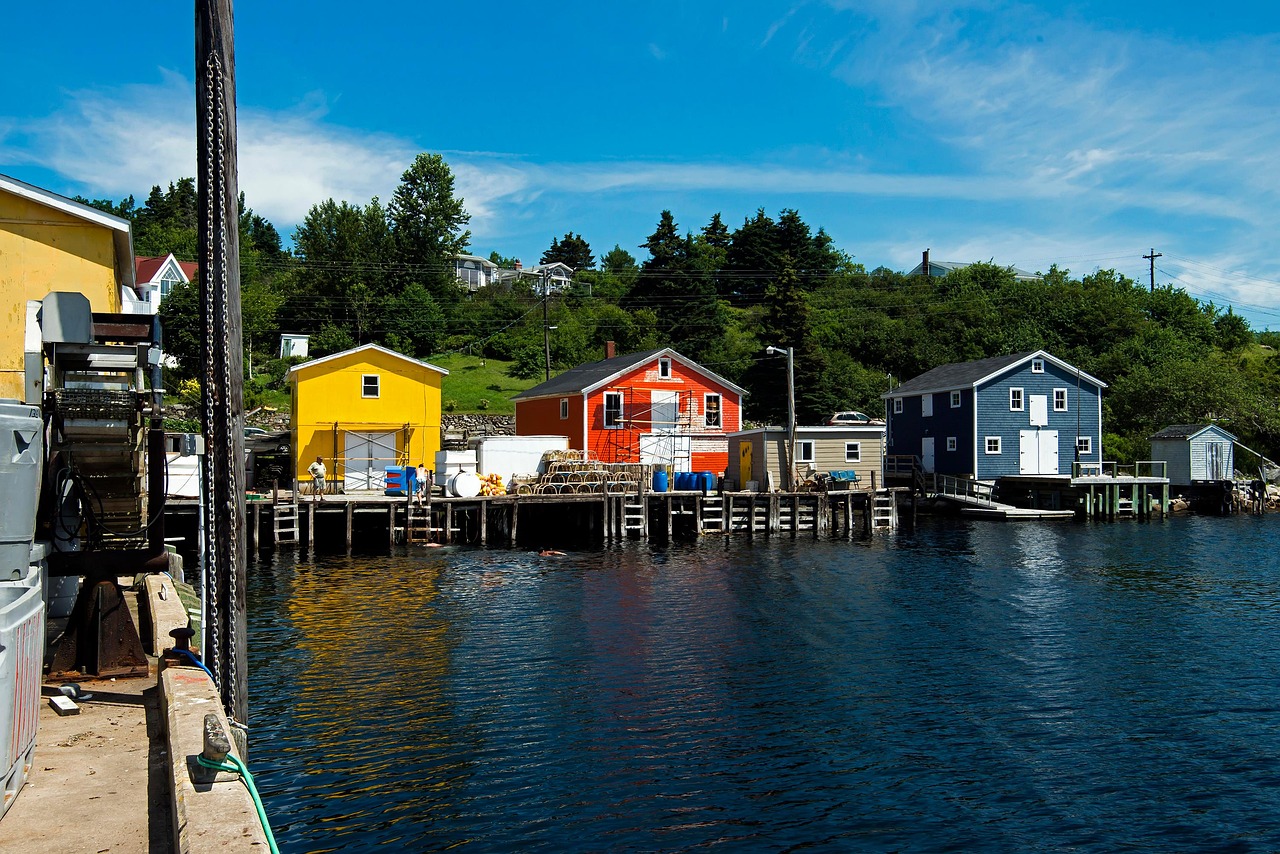
The Hull Policy and the Warranties That Void It
Marine insurance in Canada runs on its own statute, and it behaves differently from the commercial forms most business owners know. Three of those differences decide commercial fishing insurance claims.
A valued policy is a real thing, and worth asking for
The federal Marine Insurance Act expressly recognises the valued policy — one that specifies the agreed value of the vessel. An unvalued policy leaves the figure to be determined after the loss. On a working boat with custom electronics, a rebuilt engine and a hull that no comparable sale reflects, it is the most consequential choice in the commercial fishing insurance placement —, the difference between agreed value and actual cash value is the difference between a settlement and an argument.
Breach of warranty discharges the insurer from that date
This is the single most important rule in marine insurance and it has no equivalent in a standard commercial policy. Under the Act an express warranty may be in any form of words showing an intention to warrant, and a breach discharges the insurer from liability for any loss occurring on or after the date of the breach. Lay-up warranties and trading or navigational limits are warranties. Fishing outside your stated limits does not reduce your claim — it ends the cover.
Total loss has two meanings and a notice requirement
An actual total loss is where the vessel is destroyed or so damaged it ceases to be a thing of the kind insured. A constructive total loss is where the vessel is reasonably abandoned because actual total loss appears unavoidable — and to claim it you must give notice of abandonment to the insurer with reasonable diligence. Missing that step can turn a constructive total loss into a repair argument.
Sue and labour, and where the lender sits
The Act allows recovery of reasonable costs incurred to avert or minimise a loss. Separately, if you have borrowed against the boat through the provincial Fisheries and Aquaculture Loan Board, the regulations require you to obtain insurance on terms satisfactory to the Board and to assign that insurance to the Board. Loss-payee and assignment wording is a loan condition, not a formality.
P&I: Crew, Wreck, Pollution and the Limits That Apply
Protection and indemnity is the liability half of a marine placement. A shoreside commercial general liability policy will not do the work of commercial fishing insurance — marine exposures are excluded from most of them.
What P&I responds to
Canadian marine writers describe P&I as covering liability for bodily injury or death, damage to third-party property, and wreck removal, together with investigation and defence costs. Atlantic brokers commonly quote it at one, two or five million dollars. It is the part of commercial fishing insurance that answers when a crew member is hurt, when you damage someone else’s boat or gear, or when your vessel ends up on the bottom.
Your statutory limit is smaller than you think
The Marine Liability Act sets the limits for ships under 300 gross tonnage — which is almost every Atlantic fishing vessel. The limit is one million five hundred thousand dollars for claims for loss of life or personal injury, and seven hundred and fifty thousand dollars for all other claims. That is a concrete way to size a P&I limit rather than guessing at it.
Wreck removal: liable, but not required to insure
Under the Wrecked, Abandoned or Hazardous Vessels Act the owner is liable for the costs of determining whether a wreck is a hazard and for removing it. Compulsory wreck-removal insurance, however, only starts at three hundred gross tonnage. Virtually no Atlantic fishing vessel is required to carry the certificate — and every one of them carries the liability. That gap has to be closed deliberately in the commercial fishing insurance placement, because nothing else will close it.
Oil pollution is strict liability
Under the Marine Liability Act the owner of a ship is liable for oil pollution damage from the ship, including economic loss, and for the cost of preventive measures. Liability does not depend on proof of fault or negligence, with only three narrow defences — act of war, an intentional act by a third party, or government negligence in maintaining navigational aids. The definition of ship is not limited to tankers; a fishing vessel carrying bunker fuel is squarely inside it.
Carrying anyone who is not crew changes the rules
Since January 2019 the passenger liability regime has required minimum coverage of two hundred and fifty thousand dollars per passenger for ships operated for a commercial or public purpose in Canada carrying passengers other than crew. Charters, tuna trips and paying observers put you inside it. Vessels carrying no passengers other than crew are exempt.
Collision liability is split across two policies
The running down clause sits inside the hull policy and covers collision liability incurred by the insured. Excess and total loss liabilities are written separately. When a fleet owner asks whether they are covered for hitting another boat, the honest answer is that part of the answer is in the hull wording and part is above it — and both need to be read.
Who Actually Covers the Crew
This is the question that catches the most owner-operators, and it is the part of commercial fishing insurance that turns on a distinction almost nobody makes until there is an injury: workers are covered, proprietors and partners are not.
- Fishing is a mandatory industry for workers’ compensation here — the list expressly includes fishing, sealing, whaling and dredging, and fish curing and packing and the canning of lobster and other shellfish.
- Mandatory coverage begins at three or more workers, with registration required within ten days of hiring the third. Workers include permanent, casual, full- and part-time staff, officers and directors active in the business, and subcontractors in mandatory industries.
- Proprietors and partners are expressly NOT workers, and are not covered by default. Neither are officers paid solely for attending directors’ meetings.
- Special Protection coverage lets a proprietor or partner in an unincorporated business buy in, from a minimum of $10,200 a year up to the maximum assessable earnings — $79,900 for 2026. Benefits are based on the lesser of actual earnings or the amount purchased.
- Electing Special Protection removes your own exemption: once you take it, you must also cover any workers you hire, and the three-person rule no longer applies to you.
The injury numbers are not small
The Workers’ Compensation Board, working with the provincial labour department, recorded 221 reported injury claims in the Nova Scotia fisheries industry in 2024, of which 56 were time-loss injuries where the worker missed three or more days. The most common causes were sprains, strains and broken bones from slips, trips and falls; drowning; cuts from knives and machinery; chemical burns; and hearing loss.
Where compensation does not apply, the family sues
Where a fisher is not a covered worker — an uninsured proprietor or partner, for instance — the remedy is a maritime negligence claim. The Marine Liability Act allows dependants of a person who dies by the fault or neglect of another to maintain an action for their loss, including compensation for the loss of guidance, care and companionship, within two years of the death. The policy that answers that claim is the vessel owner’s P&I.
Your Licence Is Not Property — and Cannot Be Insured
For most enterprises here the licence and quota are worth more than the boat. They are also the one asset no commercial fishing insurance policy will write, because in law they are not an asset at all.
What DFO actually says
Under the Commercial Fisheries Licensing Policy for Eastern Canada a licence confers no property or other rights that can be legally sold, bartered or bequeathed. It is a privilege to do something, subject to the terms and conditions of the licence — a limited fishing privilege rather than any kind of absolute or permanent right or property. DFO recognises no lien, mortgage or third-party security interest in a licence.
Death: a five-year window for the estate
Where a licence holder dies, the estate has up to five years to recommend an eligible individual for a replacement licence. The executor or legally appointed administrator must request reissuance, the licence must be renewed annually through that period, and a substitute operator may be authorised. Non-reissuable licences simply expire on death with no succession at all.
Illness: five years across an entire career
A holder prevented by illness from participating personally may designate a substitute operator on acceptable medical documentation — but that is capped at five years in total across a fishing career, not five years per event. Maternity leave of up to seventeen weeks after birth and parental leave of up to thirty-five weeks do not count against it.
Repossession runs on a sixty-day fuse
Where a lending authority repossesses the vessel, the holder keeps eligibility for sixty days to settle or renegotiate. After sixty days with no notification of settlement, renewal eligibility is lost. The security is the boat; the licence eligibility sits behind it on a very short clock, and no commercial fishing insurance policy bridges the gap. Because the licence itself cannot be insured, the exposure is managed with life, disability and critical illness cover on the holder, and funded buy-sell agreements — not with a property policy.
What the Fishing Vessel Safety Regulations Require
The Fishing Vessel Safety Regulations apply to Canadian fishing vessels not more than 24.4 metres in length and not more than 150 gross tonnage, and have been in force since 13 July 2017. Commercial fishing insurance underwriters read compliance with them as a proxy for how the whole operation is run.
- Safety procedures must be established in writing, in English or French or both, according to the needs of the crew.
- Those procedures must address the location and use of safety equipment; preventing and recovering from falls overboard; protecting limbs from rotating machinery and avoiding ropes, docking lines and nets; fire and explosion prevention; maintaining watertightness or preventing swamping; safe loading and stowage of catch and supplies; and operating towing and lifting equipment without overloading.
- Drills must be held so the crew stays proficient, a record must be kept of every drill, and records are retained for seven years.
- A stability assessment is required for, among others, new vessels of more than nine metres hull length, and for any vessel undergoing a major modification or a change in activity likely to adversely affect stability.
- A stability notice must state the standards applied, show operational practices graphically, and say whether the vessel has been assessed for freezing-spray conditions.
- The authorized representative must keep a record of any modification, or series of modifications, affecting stability — the gap the Transportation Safety Board keeps flagging when vessels change hands.
- The Transportation Safety Board’s 2025 Watchlist still carries commercial fishing safety: 143 fatalities from 97 accidents between 2010 and 2025, with the majority of fatalities described as preventable.
- In 2025 fishing vessels were involved in 31 per cent of all shipping accidents, and the accident rate for Canadian-flag fishing vessels rose to 6.5 per thousand active vessels from 4.7 the year before — even as total marine fatalities fell.
Aquaculture Is Regulated as Property, Not Marine
Aquaculture stock cover looks like marine insurance and is often sold by marine teams. In Canadian regulation it is not marine at all — which separates it from the rest of a commercial fishing insurance programme and changes who can legally write it.
A federal ruling settles the classification
The Office of the Superintendent of Financial Institutions has ruled that aquaculture — cultivating salt or freshwater fish, shellfish, plants or other foods under controlled conditions, together with nets, cages, holding tanks and boats — is a class of property insurance. The reasoning is that any navigation involved is incidental to the farming adventure rather than the other way round. A foreign insurer therefore needs a specific order to write these risks in Canada and cannot rely on the marine exemption.
The licence, the lease and the bond
A marine site here needs both a provincial licence to conduct the activity and a lease for the Crown waterway and bottom; land-based operations need only the licence. Licences run to a maximum of ten years and leases to twenty, both renewable, while special experimental licences and leases are capped at five years and cannot be renewed. A security bond must be in place until a certificate of discharge is issued, with minimums ranging from fifty dollars to twenty-five thousand depending on cultivation method and site size.
Marking and containment are liability, not paperwork
Lessees must mark each site in the manner the Minister determines before any development, and gear and produce must remain within the site’s geographic boundaries. Drifting gear is the operator’s problem and a third-party claim waiting to happen. On the stock side, mortality cover is underwritten farm by farm on the information the operator provides rather than from actuarial tables — so the quality of your husbandry records is the quality of your submission.
Wharf, Gear, Live Holding and the Shore Side
Six exposures that sit on land, or at the water’s edge, and that the hull and P&I half of a commercial fishing insurance programme does not touch.
Gear ashore is insured separately, and usually under-declared
Atlantic marine applications ask for insured values separately on hull, electronics, skiffs and fishing gear, and nets and gear are written as their own coverage rather than being swept up in the hull sum insured. Traps, rope, buoys and nets stacked on a wharf between seasons represent real money on the commercial fishing insurance schedule and a real fire, theft and storm exposure, and the declared value is often years out of date.
Wharf owners have a statutory liability limit worth knowing
The Marine Liability Act caps the liability of an owner of a dock, canal or port at the greater of two million dollars, or one thousand dollars multiplied by the tonnage of the largest ship that has been within the area in the preceding five years. It is a rarely cited number and a useful one when sizing liability on a private wharf or a marine facility.
Fuel at a marina is regulated from 230 litres
Under the provincial Petroleum Management Regulations, all underground petroleum storage tanks are regulated regardless of size and aboveground tanks are caught at 4,000 litres — but tanks at a marina are regulated from just 230 litres. Owners must register with Nova Scotia Environment, use a certified installer, and monitor inventory for changes in system integrity. A great many wharf operators do not know that threshold applies to them.
Live holding is a mechanical risk, not just a stock one
For a lobster pound the exposures are oxygen failure, pump failure, loss of power, a temperature excursion and water quality — a mass mortality caused by a machine rather than by weather. That is why refrigeration, pumps and aeration belong on the equipment breakdown schedule and why the interaction between breakdown cover and stock value needs to be read rather than assumed.
Independent lobster buyers must hold stock by rule
The provincial licence policy requires independent lobster buyers to maintain a minimum 907 kilogram holding capacity and a 13.4 square metre handling facility, plus valid Lobster Quality Handling Course certification. If the rules require you to hold live product, the live-holding exposure is not optional and the values need to be on the policy.
Wharves themselves are under repair pressure
Fisheries and Oceans Canada manages roughly 950 harbours worth about $7.1 billion, supporting around ninety per cent of Canada’s fish harvest. In May 2026 the department committed nearly one billion dollars over five years to small craft harbours — more than thirty-five per cent above the ten-year annual average — announced at Sambro and expressly including ongoing Hurricane Fiona recovery in Atlantic Canada.
Licences, Records and the Rules That Changed
The buying and processing side was reshaped in 2025, and the new rules carry commercial fishing insurance exposures of their own.
The moratoriums are lifted
Two moratoriums ended in 2025 — seafood buyer and processor licences, capped since 2018, and groundfish buyer and processor licences, capped since the 1994 groundfish collapse. Applications opened on 1 August 2025 for most species, and on 2 January 2026 for lobster buyer licences and snow crab buyer and processor licences. Harvest quotas remain federally set, so lifting the cap does not increase volume.
Five years of records, held at the business location
Licences run up to two years and expire on 30 November. Records must be retained for a minimum of five years at the business location, with mandatory monthly or weekly reporting depending on species. Five years of records held in one building is a records-reconstruction and extra-expense exposure most commercial fishing insurance programmes never price that belongs in the business interruption conversation.
Where federal food licensing starts and stops
A processor needs a Safe Food for Canadians licence to manufacture, process, treat, preserve or grade fish. Two exemptions get missed constantly: you do not need a licence merely to store food for export or interprovincial trade, including in a temperature-controlled facility; and harvester activities that protect the catch from contamination, damage and spoilage — icing, gutting, refrigerating, rinsing, and freezing under conditions — do not require one either.
Frequently Asked Questions About Commercial Fishing Insurance
What does commercial fishing insurance cost?
Commercial fishing insurance is rated on the vessel’s value and age, where and when you fish, what you fish for, your crew size, your claims record and your safety compliance. Two identical hulls carry very different commercial fishing insurance costs on trading limits and loss history alone. The more useful early question is whether your declared values — hull, electronics, skiffs and gear separately — are current, because that decides both the commercial fishing insurance premium and what you actually collect.
Is my crew covered by workers’ compensation?
Fishing is a mandatory industry here, and coverage is mandatory once you have three or more workers. But proprietors and partners are expressly not workers, so an owner-operator in an unincorporated business has no coverage unless they buy Special Protection — a gap no commercial fishing insurance policy fills for them. Crew paid by catch share is a question worth confirming in writing with the Board for your specific arrangement rather than assuming.
What is Special Protection and should I buy it?
It is optional workers’ compensation coverage for proprietors and partners of unincorporated businesses, available from a minimum of $10,200 a year up to the 2026 maximum assessable earnings of $79,900, with benefits based on the lesser of your actual earnings or the amount purchased. The catch worth knowing: once you elect it, you must also cover any workers you hire, and the three-person exemption no longer applies to you.
How much P&I liability should I carry?
Start from the statutory limits. For a vessel under 300 gross tonnage — which covers virtually the whole Atlantic fleet — the Marine Liability Act sets the owner’s limit at $1,500,000 for loss of life or personal injury and $750,000 for all other claims. Atlantic brokers commonly write P&I at one, two or five million. Carrying commercial fishing insurance below the statutory exposure is a decision, not a saving.
Can I insure my fishing licence or quota?
No. DFO is explicit that a licence confers no property or other rights that can be sold, bartered or bequeathed — it is a privilege, not an asset, and no lien or security interest in it is recognised. Because no commercial fishing insurance policy can cover the licence, the exposure is managed on the person instead: life, disability and critical illness cover on the holder, and a funded buy-sell agreement.
What happens to the licence if I die?
Under DFO’s Eastern Canada licensing policy the estate has up to five years to recommend an eligible individual for a replacement licence, and the executor or administrator must request the reissuance. The licence has to be renewed annually through that period. Non-reissuable licences expire on death with no succession, which is why the class of licence matters enormously to a succession plan.
Do I have to insure against wreck removal?
Not by law, unless your vessel is 300 gross tonnage or more — and almost no Atlantic fishing vessel is. But the liability under the Wrecked, Abandoned or Hazardous Vessels Act applies to every owner regardless of tonnage, covering the cost of assessing whether the wreck is a hazard and of removing it. Nothing compels you to buy the cover, which is exactly why it has to be deliberately placed in the P&I.
Am I liable for a fuel spill even if it was an accident?
Yes. Under the Marine Liability Act the owner is liable for oil pollution damage from the ship, including economic loss and the cost of preventive measures, and that liability does not depend on proof of fault or negligence. The only defences are act of war, an intentional act by a third party, or government negligence in maintaining navigational aids.
Does fishing outside my trading limits affect a claim?
It ends the cover for that period. Marine warranties are not conditions — under the Marine Insurance Act a breach discharges the insurer from liability for any loss occurring on or after the date of the breach. Navigational limits and lay-up warranties are warranties. If your plans change, the endorsement has to come before the voyage, not after the loss.
Is aquaculture insured under a marine policy?
No, and this surprises people. Canadian regulation classifies aquaculture as property insurance, on the reasoning that any navigation is incidental to the farming operation. It matters practically because a foreign insurer needs a specific order to write these risks in Canada rather than relying on the marine exemption, which shapes who can participate on your placement.
Do I need a federal food licence to hold or store product?
Not simply to store it. You do not need a Safe Food for Canadians licence merely to store food for export or interprovincial trade, including in a temperature-controlled facility. You do need one to manufacture, process, treat, preserve or grade fish. Harvester activities that protect the catch from contamination, damage and spoilage are also outside the licensing requirement.
What is the marine market doing right now?
Canadian marine commentary for 2026 puts hull and machinery flat to five per cent down and cargo flat to five per cent down, while protection and indemnity runs flat to eight per cent up, on the back of general increases announced by more than half the International Group clubs. Hull insurers are placing increasing weight on the strength of an operator’s risk management, which is now a live variable in commercial fishing insurance pricing. The wider Canadian commercial market has been softening for nine consecutive quarters on property.
Related Coverages and Business Services
The pages below go deeper on the individual commercial fishing insurance policies referenced above.
For the other sectors we write, and how a sector program is built, see insurance by industry.
Schedule a Consultation Today
Bring us your vessel schedule, your licence list and your last P&I certificate. Most commercial fishing insurance problems are visible in those three documents long before they turn into a claim — and the crew question is worth settling before the season rather than after an injury.