
High-Net-Worth Insurance
High net worth insurance, or private client insurance, is built for households whose homes, collections, vehicles and liability exposures have outgrown the standard market — higher limits, broader wordings and agreed-value settlements in one coordinated program, placed for you by an independent brokerage with access to more than 50 insurance markets.
What Is High-Net-Worth Insurance?
High net worth insurance — the market usually calls it private client insurance — is a coordinated set of personal policies written for households whose homes, collections, vehicles and liability exposures have outgrown the standard market. Home, valuable articles, automobile, watercraft and personal excess liability are underwritten together, on broader wordings, by a small group of specialty insurers.
The difference starts before the policy is issued. Instead of a rate table and a desktop estimate, a private client program begins with a professional appraisal of what your home would actually cost to rebuild and an inventory of what you own, then builds the limits around those numbers.
What sets these programs apart:
- Limits built from real replacement cost — established by the insurer's own appraiser, not a rating algorithm.
- Broader wordings — all-risk coverage with far fewer of the special limits that cap standard policies on jewellery, art and collections.
- Agreed-value settlements — scheduled items and collector vehicles are settled at a value set in advance, without depreciation or debate.
- One program, one advisor — homes, cottages, vehicles, boats and liability coordinated under a single renewal.
- Loss prevention included — risk consultations, water shut-off device credits and wildfire response services on eligible policies.

Signs You Have Outgrown a Standard Policy
There is no single dollar figure that makes a household a private client. In practice, most families arrive at high net worth insurance because one of the following has quietly become true.
Your rebuild cost has outgrown the standard market
Private client programs generally begin where a home's replacement cost reaches roughly $1 million to $1.5 million. Thresholds vary by insurer, and every one of them is measured on rebuild cost — not what the property would sell for.
The house is difficult to replace
Imported stone, milled woodwork, a heritage facade, an elevator, a wine cellar, a guest house or a purpose-built theatre are not things a standard replacement-cost calculator prices well.
Your possessions exceed the special limits
A standard policy caps theft of jewellery, watches and furs at roughly $1,000 to $6,000, cash and coins at $200 to $500, and collectibles at a few thousand dollars. Above those figures, the policy simply stops paying.
There is more than one property
A cottage, a ski property, a winter condo in the sun or a rental unit each add seasonal vacancy, water and liability exposures that a single homeowner policy was never designed to coordinate.
The vehicles do not fit a standard rate class
Collector, exotic and limited-production cars need an agreed or guaranteed value endorsement. Settled at actual cash value, an appreciating vehicle is almost always underpaid.
Liability has outpaced a $1 or $2 million limit
Household employees, board seats, teen drivers, entertaining at home, a boat and a public profile all create exposures that sit well beyond the liability limits attached to a typical home and auto policy.
How a Private Client Policy Differs
The two columns below describe the pattern we see across the Canadian high net worth insurance market. Wordings differ by insurer and by province, so treat this as the shape of the difference rather than a description of any one policy.
A standard homeowner policy
- Coverage limit set from a desktop replacement-cost estimate
- Special limits cap theft of jewellery, art, collections, cash and bicycles
- Contents settled with depreciation unless the item is actually replaced
- Rebuilding capped at the policy limit, with guaranteed replacement offered selectively
- Accidental water, sewer backup and overland water bought separately, each with its own sub-limit and deductible
- Personal liability commonly $1 million to $2 million
- Claims handled through a general adjusting queue
A private client program
- Limit built from an on-site appraisal by the insurer's own risk consultant
- Valuable articles scheduled or blanketed at agreed value, most causes of loss, frequently with no deductible
- Contents settled without deduction for depreciation, with cash settlement options
- Extended replacement cost that can exceed the stated limit when you rebuild on the same site
- Enhanced water packages that bring accidental water, sewer backup and overland water together
- Personal excess liability from $1 million into the tens of millions, worldwide
- A named adjuster, your choice of contractors and appraisers, and faster settlement
Coverages We Place for Private Clients
Every high net worth insurance program is assembled from the pieces a household actually needs. Most start with the home and valuable articles, then extend outward.
High-Value Home Insurance
Extended replacement cost, bylaw and building code upgrade, enhanced water, generous additional living expense, and coverage for landscaping, outbuildings and custom finishes. Written for principal residences, heritage homes, condominiums and homes under renovation.
Valuable Articles
Jewellery, fine art, silver, furs, wine, musical instruments, firearms, rugs, memorabilia and designer handbags — blanketed or itemized at agreed value, covered worldwide and in transit, and typically with no deductible.
Collector and High-Value Automobiles
Agreed value written on the correct provincial endorsement, spare parts and transport coverage, and layered protection where the compulsory auto plan is government-run. Daily drivers, exotics and restoration projects are all placeable.
Personal Excess Liability
Additional limits sitting above your home, auto, cottage and watercraft policies, with worldwide protection, defence costs that generally sit outside the limit, and drop-down cover for exposures the underlying policies never contemplated.
Cottage and Secondary Properties
Seasonal occupancy, shoreline and outbuilding exposures, docks and boathouses, short-term rental use, and the winterization conditions that decide whether a freezing loss is paid.
Watercraft and Yacht
Agreed-value hull cover, protection and indemnity, navigational limits and lay-up periods, pollution and wreck removal, tenders and paid crew. Small craft can often stay on the home policy; beyond that a marine wording is the right instrument.
Private Aviation
Hull and liability for owned aircraft, plus non-owned aircraft cover for renting and borrowing. Limits are placed well above the statutory minimums, which are far lower than most owners assume.
Family Cyber, Fraud and Identity
Online fraud, cyber extortion, identity restoration with a dedicated case manager, data recovery across connected home devices, and cyberbullying support for everyone named on the policy.
The Exposures That Matter Most Here
Water, in all of its forms
Water is the most common and most expensive claim on Atlantic Canadian homes. Accidental water, sewer backup and overland water are separate coverages with separate limits and deductibles. Private client programs bring them together, but availability still depends on the property's flood mapping.
Wind and post-tropical storms
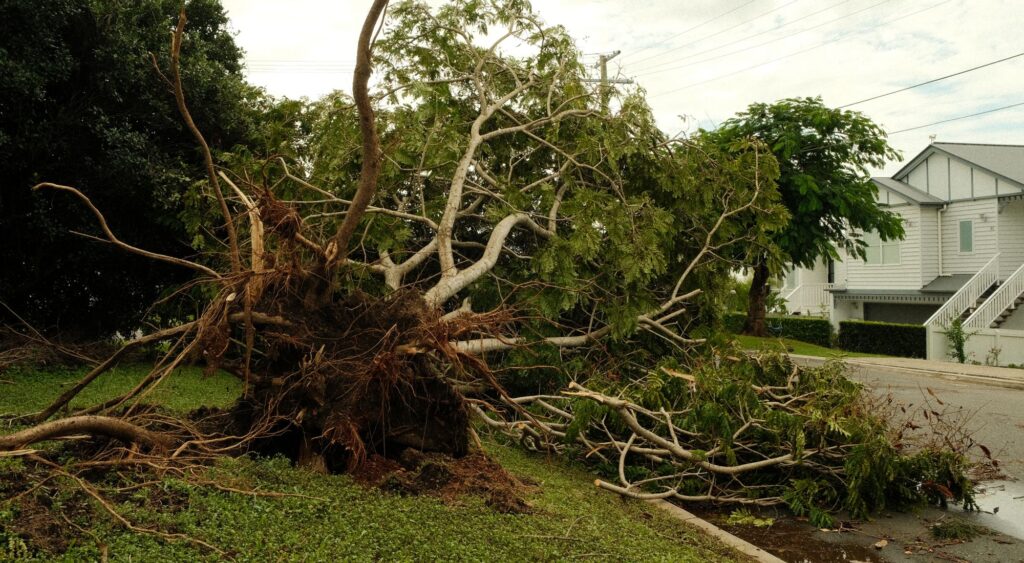
Coastal and exposed properties see wind, wind-driven rain, tree and outbuilding damage, and long power outages. What matters at claim time is the deductible structure, the debris removal limit and how generously additional living expense responds when a rebuild takes months.
Waterfront and shoreline
Docks, boathouses, retaining walls and shoreline erosion sit awkwardly in standard wordings. Some overland water forms extend to mudflow and shoreline collapse caused by erosion; many exclude storm surge entirely. It is worth knowing which yours does before a storm, not after.
Wildfire and the wooded interface
Homes on wooded lots carry a real exposure. Several private client insurers now provide wildfire defence services on eligible single-family homes in the higher-risk provinces, including pre-season hazard assessments and crews who apply protective gel and perimeter sprinklers as a fire approaches.
Empty houses and seasonal use
Coverage commonly changes after about 30 days of vacancy, and vandalism, theft, water and glass often fall away without a vacancy permit. Extended travel, a property between owners, or a home under renovation all need to be disclosed and endorsed.
Valuations, Appraisals and Keeping Limits Current
A high net worth insurance program is only as good as the numbers behind it. Most disappointing settlements are not caused by a bad wording — they are caused by a schedule that stopped reflecting reality three renewals ago.
- Reappraise every three to five years. If a reappraisal is missed, a claim is generally settled against the last appraised amount, no matter what the piece is worth today.
- Use a recognized appraiser. For jewellery, a Canadian Accredited Jewellery Appraiser; for household contents and collections, a member of the Canadian Personal Property Appraisers Group or a comparable fine-art body.
- Insurance value is not estate value. The report should state that it is prepared for insurance, give replacement value in Canadian dollars, and describe the item well enough to identify it.
- Blanket the small, itemize the significant. Blanket cover carries a per-item cap; anything above it, or anything irreplaceable, should be listed individually.
- Rising markets are handled. Many private client wordings will pay above a scheduled amount — commonly up to 150 per cent — where market value has moved since the last appraisal, subject to conditions.
- New purchases are not automatic forever. Private client policies typically give around 90 days to schedule a newly acquired item; standard floaters are often half that.
- Report renovations. Extended and guaranteed replacement cost generally depend on insuring to 100 per cent of the insurer's figure, disclosing improvements and rebuilding on the same site.

A worked example
A ring appraised at $28,000 in 2018 and never revisited is scheduled at $28,000. Gold and stone prices move, the piece is now worth materially more, and the settlement is still $28,000 — less whatever it costs to have the loss argued. A current appraisal and a market appreciation clause are what close that gap.
What we ask for at renewal
An updated schedule of anything acquired or sold, appraisals older than five years flagged for refresh, confirmation of renovations and changes in occupancy, and a note of any new vehicle, vessel, board seat or household employee. It takes a short conversation and it is the single highest-value thing a client can do.
Risk Management, Service and Claims
Coverage is only half of high net worth insurance. What clients actually notice is the year that something goes wrong.
A risk assessment before the policy is issued
Most private client insurers send a trained consultant to walk the property, document construction and finishes, and establish the rebuild cost. It is complimentary, and it is what makes the replacement-cost promise meaningful.
Loss prevention that earns its keep
Flow-based water shut-off devices on the main line — with app notifications switched on — attract premium credits from several markets. Monitored alarms, generator backup for wine cellars and grading work all move the file.
Claims handled by people who know the file
A named adjuster, a direct line, your choice of restoration contractor and appraiser, and settlement authority that does not require the loss to be re-explained three times. Several markets commit to contact and payment turnaround measured in hours.
Household employment sorted out properly
Employing a nanny, housekeeper, caregiver or property manager brings employment standards and workers' compensation obligations that vary by province. We identify what applies and make sure the liability side lines up with it.
One renewal, reviewed annually
Home, cottage, vehicles, watercraft, collections and excess liability reviewed together against current values, rather than each drifting on its own anniversary date.
Discretion as a default
Schedules, appraisals and inventories are handled on a need-to-know basis inside our office and with the markets we approach on your behalf.
How We Build Your Program
Stanhope Simpson is an independent brokerage. We are not owned by an insurer and we do not have a house market to feed, which means the high net worth insurance recommendation you get is the one we would make for ourselves.

1. Discovery
We map the household: properties and how they are used, vehicles, vessels, collections, travel, staff, board seats and anything that creates liability. Half an hour of questions prevents most coverage gaps.
2. Valuation and exposure analysis
Rebuild costs confirmed by appraisal, schedules built or refreshed, water and wildfire exposure assessed, and liability limits tested against what a serious claim would actually look like.
3. Market placement
We approach the private client markets our clients qualify for from a panel of more than 50 insurer and surety markets, and present the options side by side rather than a single quote.
4. Annual review and claims advocacy
Values updated, changes captured, and, when a claim happens, a broker who deals with the adjuster on your behalf instead of handing you a phone number.
Frequently Asked Questions About High Net Worth Insurance
What qualifies as high net worth insurance in Canada?
There is no legislated definition. In practice, a household enters the private client market when its home’s rebuild cost, its collections or its liability exposure exceed what standard insurers will comfortably write — commonly around a $1 million to $1.5 million replacement cost, or a collection of jewellery, art or vehicles worth more than the special limits on an ordinary policy. Thresholds and appetite vary by insurer, so eligibility is confirmed at quote rather than assumed.
Is high net worth insurance more expensive than a standard policy?
Not always, and often not by as much as clients expect. Private client insurers underwrite a lower-frequency book, credit loss prevention generously, and consolidate several policies into one program. Where premium does rise, it is usually because the sum insured rises — a home appraised at its true rebuild cost, and collections scheduled at what they are actually worth, are simply more insurance than the household was carrying before.
How is my home's coverage limit determined?
By appraisal, not by market value. The insurer sends a risk consultant to document construction, finishes, systems and unique features, and the limit is set from what it would cost to rebuild the same house on the same site today. Market value is irrelevant to that calculation — land, location and demand do not need rebuilding.
What are special limits, and how does valuable articles coverage fix them?
Standard home policies cap certain categories: jewellery, watches and furs at roughly $1,000 to $6,000, cash and coins at $200 to $500, stamps and manuscripts at $1,000 to $2,000, bicycles at $500 to $1,000, and collectibles at a few thousand dollars. Worth knowing: in most Canadian wordings those caps apply to theft and mysterious disappearance, not to a fire. Valuable articles coverage removes the cap by scheduling or blanketing the items at agreed value, usually on an all-risk basis, worldwide, and often with no deductible.
Do I need an appraisal, and how often?
Insurers generally require an appraisal above a threshold that varies by category and carrier, and accept a detailed description and value below it. Independent of that, appraisals should be refreshed every three to five years. A stale appraisal is the most common reason a valuable articles claim settles for less than the client expected.
Can one program cover multiple homes, a cottage and several vehicles?
Yes, and that is usually the point. A high net worth insurance program is designed to hold a principal residence, a cottage or seasonal property, condominiums, rental units, automobiles, watercraft and collections under coordinated terms with a single renewal date, one deductible structure and one excess liability policy sitting over all of it.
How does coverage work for a collector or exotic car?
Through an agreed or guaranteed value endorsement, so a total loss pays the value set in advance rather than a depreciated figure. The endorsement differs by province, and it is worth being precise: some provincial forms cap the payout at a stated amount rather than guaranteeing it. Collector programs also carry usage expectations — pleasure use, an annual distance allowance and secure storage — and typically require every licensed driver in the household to have a regular vehicle insured elsewhere.
How much personal excess liability should I carry?
Enough that a catastrophic judgment does not reach your assets. Canadian personal umbrellas are commonly written from $1 million to $10 million, with substantially more available, and insurers generally require underlying limits of at least $1 million — often $2 million on auto. The right number is a function of net worth, driver profile, entertaining, watercraft and public exposure, not a rule of thumb.
Does high net worth insurance cover household staff?
The liability side of a private client program responds to injuries suffered by domestic employees and to allegations arising from their work, and excess liability sits above it. Separate from insurance, employing household staff triggers provincial employment standards and workers’ compensation obligations — in Ontario, for example, registration with the WSIB is mandatory once a domestic worker exceeds 24 hours a week for one household. Requirements differ by province, and we will point you to what applies.
What actually happens when I have a claim?
You call us, not a call centre. We report the loss, brief the adjuster, and stay in the file until it settles. On private client programs you will typically be assigned a named adjuster, you can choose your own restoration contractor and appraiser, and for a total loss you may have the option of a cash settlement rather than a rebuild — though taking cash generally caps the payment at the policy limit, where rebuilding is what unlocks extended replacement cost.
Can you insure property outside Canada?
Often, yes. Private client markets write or coordinate coverage for winter homes, foreign residences and assets held abroad, and valuable articles cover generally follows the item anywhere in the world. Some jurisdictions require locally admitted paper, which we arrange through correspondent markets.

Related Personal Insurance Coverages
A high net worth insurance program is usually assembled from several of these. Explore the coverages that apply to your household.
For everything else the household carries, and how the pieces are reviewed together, see personal insurance.
Schedule a Consultation Today
Personalized insurance and surety solutions backed by decades of industry expertise.
Reach out to us today and experience the Stanhope difference!