
Surety Bonds
Surety bonds guarantee that a contractual, regulatory or legal obligation will be met, protecting project owners, public bodies and counterparties while allowing the business behind the obligation to pursue work it could not otherwise qualify for. Stanhope Simpson places construction, commercial, developer and cross-border surety bonds for clients across Atlantic Canada, structuring bonding programmes around the contract requirement, the balance sheet and where the business is heading next.
The fundamentals
A Surety Bond Is a Guarantee, Not an Insurance Policy
Almost every misunderstanding about surety bonds traces back to one assumption: that surety bonds behave like an insurance policy. They do not. Surety bonds are written by licensed insurers and regulated as insurance, but they function as an extension of credit. Understanding that distinction is what allows a contractor to approach a surety the way they would approach a lender, and to build a programme of surety bonds that grows with the business rather than capping it. The Surety Association of Canada sets out the framework these six points describe.

Three Parties, Not Two
An insurance policy is a two-party contract between insurer and insured. A surety bond is a three-party agreement: the principal who must perform, the obligee who is protected, and the surety that guarantees the outcome. The party paying for the bond is not the party it protects.
It Responds to Default, Not Accident
Insurance responds to a fortuitous event. A surety bond responds to the principal’s failure to perform its contract, whatever the cause. That is why a bond is a conditional instrument: nothing is payable until a default is established.
You Indemnify the Surety
Before any bond is issued you sign a general indemnity agreement, usually with personal indemnity from the shareholders. If the surety pays a claim, it has the right to recover what it paid, plus its costs, from you. An insurer has no equivalent right against its own insured.
Underwritten to No Expected Loss
An insurer prices a book of business expecting a certain loss ratio. A surety underwrites to a standard of no expected loss — it is lending its balance sheet and its name, and it screens applicants the way a bank screens a credit application.
The Premium Is a Fee for Credit
Because the surety does not expect to fund losses, the premium is best understood as a service fee for the use of its credit rather than a pooled contribution against future claims. There is no deductible on a conventional bond.
Liability Is Capped at the Bond Amount
The penal sum written on the face of surety bonds is the ceiling. A surety is never liable for more than the total amount of the bond, no matter what the actual cost of completion turns out to be — which is why sizing the bond correctly matters.
The practical consequence shows up on your balance sheet. An irrevocable letter of credit ties up your bank line and can squeeze cash flow mid-project; a surety bond does not consume bank credit, and it comes with prequalification the bank does not perform. The Surety Association of Canada sets out that comparison in its information paper on surety bonds versus letters of credit.
Protect your Business
Construction Bonds
Stanhope Simpson specializes in construction bonding solutions for contractors, developers, and construction managers across Atlantic Canada and beyond. Our construction surety bonds—including bid bonds, performance bonds, labour and material payment bonds, maintenance bonds, and related surety instruments—are structured to meet owner, lender, and procurement requirements while supporting contractor growth and cash flow. With deep construction expertise and strong surety relationships, we help clients qualify for projects, manage risk, and build long-term bonding capacity.

Construction Bond Solutions
Feature Listing
Protect your Business
Commercial Bonds
Commercial surety bonds provide financial guarantees required by governments, courts, and private counterparties to ensure contractual and regulatory obligations are met. Stanhope Simpson arranges a wide range of commercial surety bonds, including licence and permit bonds, administration bonds, quarry bonds and customs-related bonds. Our team works closely with businesses to navigate bond requirements efficiently, ensuring compliance while minimizing cost and disruption.
Commercial Bond Solutions
Feature Listing

Protect your Business
Developer Bonds
Developer surety bonds are essential for real estate developers undertaking subdivision, site servicing, and residential construction projects. Stanhope Simpson structures developer bonding solutions such as site agreement and subdivision bonds and Tarion marketing and warranty bonds, helping developers satisfy municipal, regulatory, and consumer protection requirements. We understand development timelines, municipal expectations, and lender considerations, allowing projects to move forward smoothly and on schedule.
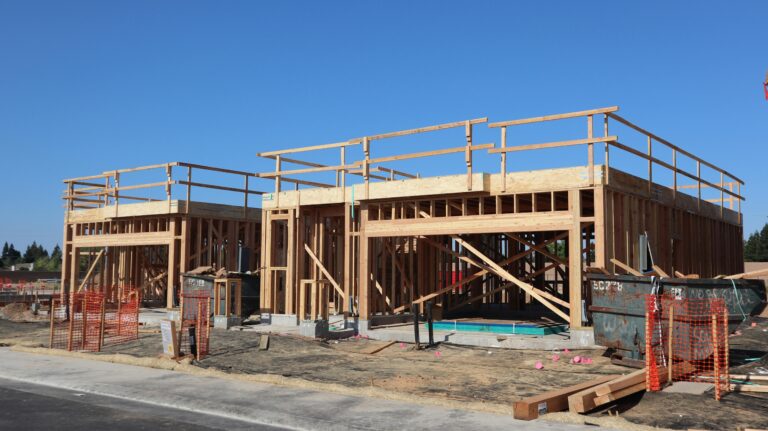
Developer Bond Solutions
Feature Listing
Protect your Business
USA Bonds
Stanhope Simpson supports Canadian contractors and businesses that need surety bonds for work in the United States. Cross-border surety bonds are a different exercise from domestic bonding: the forms, the statutory framework and the underwriting standards all differ, and a Canadian surety facility does not automatically travel across the border. We arrange U.S. bid and performance bonds for Atlantic Canadian clients pursuing American work, and we manage the documentation and the market relationships that sit behind them so that a U.S. opportunity does not stall on a requirement for surety bonds.
Cross-Border Bond Solutions
Feature Listing

Underwriting
How a Surety Decides What You Can Bond
How much you can carry in surety bonds is not a number you apply for. It is the conclusion a surety reaches after reviewing your finances, your record and your organisation, and it moves as those move. Two contractors with identical revenue can be approved for very different amounts of surety bonds. Canadian sureties and brokers still describe how they underwrite surety bonds through the three Cs — character, capacity and capital — while the Surety Association of Canada publishes its own list of what underwriters actually weigh. Both point the same way.

Character
The hardest of the three to quantify and the one underwriters treat as decisive. It covers your payment record with subtrades and suppliers, how you have handled disputes, the quality of your reporting, and whether the surety believes you will tell them about a problem before it becomes a claim.
Capacity
Not financial capacity — organisational capacity. Do you have the people, the equipment and the systems to deliver the work you are asking to bond? A surety compares the project in front of you with the projects you have actually completed. A common benchmark is roughly one and a half times your largest finished job.
Capital
The balance sheet. Working capital and shareholders’ equity carry the most weight, alongside your debt-to-equity position and the quality of your receivables. Sureties do not take the balance-sheet working capital figure at face value; they adjust it, which is why the number in your statements and the number the surety works from can differ.
Working Capital Sets the Ceiling
Working capital is the single strongest driver of how much you can carry in surety bonds. Canadian brokers commonly describe a single-job limit in the range of ten to fifteen times adjusted working capital and an aggregate limit of fifteen to twenty-five times, though these are rules of thumb rather than published standards and every surety applies its own.
Single-Job Versus Aggregate
Two limits, and contractors regularly trip on the second. The single-job limit is the largest bonded contract the surety will support. The aggregate limit is the total cost-to-complete you may carry at once across all uncompleted work — and unbonded work consumes that aggregate too.
Your Statement Assurance Level
A Notice to Reader can support a small first facility, but a review engagement is the usual minimum once bond limits pass roughly one million dollars, and audited statements are generally reserved for much larger programmes. Approaching a surety with the wrong level of assurance is one of the most common reasons a submission stalls.
Alongside the three Cs, the Surety Association of Canada publishes what a surety weighs when a contractor asks for a contract bond: character and experience matched to the project, financial strength adequate to the work programme, a clean payment history with subtrades and suppliers, established bank credit lines in good standing, and the quality of management. It also expects organisation charts, business plans and a succession plan — items contractors rarely anticipate and which quietly separate a strong submission from an average one.
The process
Putting a Bond Facility in Place
A surety does not approve surety bonds one at a time. It approves a facility — a bond line with a single-job limit and an aggregate limit — and individual bonds are then issued against it as projects arise. The general indemnity agreement is signed once, at facility set-up. Getting that facility established well before you need it is the single most useful thing a contractor can do for its bonding programme.
Start Before You Need It
The worst time to approach a surety is the week a bonded tender closes. Facility approval takes time, and a rushed submission with gaps in it reads as a risk in itself. Treat the surety conversation as part of strategic planning, not tender preparation.
Build the Submission Properly
Two to three years of accountant-prepared financial statements plus current interims, a work-in-progress schedule with cost-to-complete on every job, a bank reference letter, personal net worth statements from the owners, a contractor’s questionnaire, an organisation chart with key résumés, and a completed-projects list with owner references.
Add the Administrative File
Certificate of incorporation, a current workers’ compensation clearance from your provincial board, and your commercial general liability certificate. These are the items most often missing when a file goes back and forth, and they are the easiest to have ready in advance.
Facility Approval, Then Bonds
Once the facility is approved you have limits to work within. Each individual bond is still reviewed against the specific job, but you are no longer starting from zero every time. Your broker manages the issuance and the reporting that keeps the facility current.
Know the Tender-Stage Instruments
Three different documents sit ahead of the final bonds and they are not interchangeable. A prequalification letter states bondability and is not binding. An agreement to bond commits the surety alone. A bid bond is a three-party obligation that exposes you to a claim if you fail to enter the contract.
What Slows Approval Down
Incomplete or stale financial information, a work-in-progress schedule that does not reconcile, unresolved payment complaints from subtrades, experience that does not match the work being requested, and the wrong statement assurance level for the size of programme you are asking for.
Capacity for surety bonds grows the same way it is granted — deliberately. Retain earnings rather than distributing them, step project size up in stages rather than in leaps, pay subtrades and suppliers promptly because the surety checks, strengthen the management bench, upgrade the assurance level on your statements as the programme grows, and keep your broker informed early. Sureties respond well to contractors who bring them problems before the problems become claims.
Requirements
Where Surety Bonds Are Required
Requirements for surety bonds come from three directions: legislation and public procurement policy, the tender documents on an individual solicitation, and private owners or lenders protecting their own position. In Atlantic Canada the statutory picture is uneven, which makes reading each solicitation on its own terms more important here than in provinces with a blanket rule.

Public Work
- Nova Scotia — provincial construction contract guidelines make bonding the recommended form of bid and contract security at $500,000 and above. Between $100,000 and $500,000, surety bonds, irrevocable standby letters of credit, money orders, certified cheques or bank drafts are all acceptable.
- New Brunswick — a bid bond is mandatory where the estimated contract value is $500,000 or more, and the successful contractor must supply a performance bond and a labour and material payment bond within fourteen days of notice of award.
- Prince Edward Island and Newfoundland & Labrador — no blanket statutory bonding mandate. Requirements are set solicitation by solicitation, so read the instructions to bidders every time rather than assuming a provincial rule.
- Federal work — bid security and contract security are defined in the Government Contracts Regulations, and the federal bid bond form is set at ten per cent of the bid to a maximum of $2,000,000. Bonds must be written by a surety on the Treasury Board list of acceptable bonding companies.
- Ontario — public contracts of $500,000 or more require both a performance bond and a labour and material payment bond, each at a minimum of fifty per cent of the contract price, on the prescribed statutory forms.
Private Owners, Lenders and Developers
- Private owners and construction managers frequently require the same bonds as public bodies, particularly where a lender is financing the project and wants completion risk transferred off its own balance sheet.
- General contractors increasingly bond their own trade contractors, so a subcontract of any size can carry a bonding requirement of its own.
- Developers face municipal servicing and subdivision security requirements. Halifax Regional Municipality has accepted a development bond alongside cash, certified cheques, bank drafts and letters of credit since November 2024.
- Regulated businesses of every kind — motor vehicle dealers, collection agencies, electrical and road-cut permit holders, customs importers, court-appointed estate administrators — post commercial surety bonds that have nothing to do with construction at all.
Most construction surety bonds on public work are issued as a pair — a performance bond guaranteeing completion and a labour and material payment bond protecting subtrades and suppliers — with a bid bond at tender and, where a trade contractor is the concern, a subcontractor performance bond.
On standard forms, the CCDC 220, 221 and 222 bond forms were revised in May 2024 — the first update since 2002. CCDC 221 grew from one page to thirteen and CCDC 222 from two to seven, adding structured notice, meeting and response timelines. The Surety Association of Canada has been explicit that the risk profile of the forms has not changed: these remain conditional surety bonds that respond on contractor default, and the revisions are procedural rather than an expansion of coverage.
On cost, Canadian brokers publicly quote roughly 0.5% to 1.5% of contract value for a qualified contractor’s combined fifty-fifty performance and labour and material bonds, rising toward 3% or more where the financial history is thin, plus an annual facility administration fee. Neither the regulators nor the Surety Association of Canada publishes rates — your actual rate is set by your surety against your own financial profile, which is the strongest argument for building the balance sheet before you need the capacity.
Surety Bond FAQs
Are surety bonds a type of insurance?
No. A surety bond is a three-party guarantee between the surety, the principal who must perform and the obligee who is protected; an insurance policy is a two-party contract. A bond responds to the principal’s default rather than to an accidental event, and the surety has the right to recover from the principal whatever it pays out. Surety is written by licensed insurers and regulated as insurance, but it functions as an extension of credit.
If the surety pays a claim, do I have to pay it back?
Yes. Before any bonds are issued you sign a general indemnity agreement, normally with personal indemnity from the shareholders, obliging you to make the surety whole for its losses, legal fees and investigation costs. This is the single most important structural difference between surety bonds and insurance, and it is why sureties underwrite to a standard of no expected loss.
What does my broker need to set up a bond facility?
Two to three years of accountant-prepared financial statements plus current interim figures, a work-in-progress schedule showing cost-to-complete on every job, a bank reference letter, personal net worth statements from the owners, a contractor’s questionnaire, an organisation chart with key résumés, and a completed-projects list with owner references. Add your certificate of incorporation, workers’ compensation clearance and general liability certificate. The Surety Association of Canada also expects a business plan and a succession plan.
Do I need audited financial statements?
Usually not to start. A Notice to Reader can support a small first facility, but a review engagement is the common minimum once bond limits pass roughly one million dollars. Full audits are generally expected only of much larger contractors or for very large single bonds. Approaching a surety with an assurance level below what the requested programme warrants is one of the most common reasons a file stalls.
What do surety bonds cost?
Canadian brokers publicly quote roughly 0.5% to 1.5% of contract value for a qualified contractor’s combined fifty-fifty performance and labour and material bonds — in the order of $5,000 to $15,000 on a $1 million contract — rising toward 3% or more where the financial history is limited. Expect an annual facility administration fee as well. No Canadian regulator or industry association publishes rates; your rate is set by your surety against your own financial profile.
Is there a premium for a bid bond or an agreement to bond?
Usually not a separate one. Canadian brokers report that tender-stage instruments are normally covered by the annual facility fee, with premium charged when the final performance and payment bonds are issued. Note the difference between them: an agreement to bond commits the surety alone, while a bid bond is a three-party obligation that exposes you to a claim if you fail to enter the contract after your bid is accepted.
What is the difference between a single-job limit and an aggregate limit?
The single-job limit is the largest individual bonded contract your surety will support. The aggregate limit is the total cost-to-complete you may carry at one time across all uncompleted work — and unbonded work counts against it. A contractor with a $5 million single limit and a $15 million aggregate can take on a $5 million bonded project while carrying up to $10 million of other outstanding work.
How do I increase my bonding capacity?
Working capital is the strongest lever. Retain earnings rather than distributing them, step project size up gradually rather than in leaps, pay subtrades and suppliers promptly because the surety checks references, strengthen your management bench, keep accurate job costing, and upgrade the assurance level on your financial statements as the programme grows. Communicating with your surety early — before a problem, not after — does more for capacity over time than any single financial ratio.
Do I have to be bonded on public work in Nova Scotia or New Brunswick?
It depends on the province and the contract size. Nova Scotia’s provincial guidelines make bonding the recommended form of bid and contract security at $500,000 and above, with surety bonds, irrevocable standby letters of credit, money orders, certified cheques or bank drafts acceptable between $100,000 and $500,000. New Brunswick is firmer: a bid bond is mandatory at $500,000 or more, and the successful contractor must supply performance and labour and material payment bonds within fourteen days of notice of award. Prince Edward Island and Newfoundland & Labrador set requirements in the tender documents rather than by statute.
The CCDC bond forms changed in 2024 — am I giving away more coverage?
No. CCDC 220, 221 and 222 were revised in May 2024, the first update since 2002. CCDC 221 grew from one page to thirteen and CCDC 222 from two to seven, adding structured notice, meeting and response timelines and provisions for interim and mitigation work. The Surety Association of Canada has stated plainly that the risk profile of the standards has not changed: these remain conditional surety bonds responding on contractor default, and the revisions are procedural rather than an expansion of coverage.

Schedule a Consultation Today
Personalized insurance and surety solutions backed by decades of industry expertise.
Reach out to us today and experience the Stanhope difference!